Signs Tube Fed Baby Will Fail Second Swallow Study
Top of page
Primal Points
- Normal development of feeding and swallowing is an of import basis for understanding feeding and swallowing disorders in infants and children.
- Critical and sensitive periods are of import considerations in developmental expectations for expanding textures in young children.
- Pertinent questions to make up one's mind if further investigation of feeding and swallowing is needed:
- If meal times takes more than thirty minutes on boilerplate.
- Are meal times stressful?
- Does the kid prove signs of respiratory stress?
- Has the kid not gained weight in the by 2 to 3 months?
- Most children with complex feeding and swallowing issues are best served past an interdisciplinary team.
- Videofluoroscopic consume written report (VFSS) or flexible endoscopic examination of swallowing (FEES) are needed to define pharyngeal physiology with risks for aspiration or other pulmonary problems
- Intervention strategies must not jeopardize nutrition and hydration, nor should they be stressful to infants and children.
- Outcomes of therapy depend on multiple interrelating systems, including neurologic status, airway protection, and integrity of gastrointestinal (GI) tract.
Acme of page
Introduction
Adequate respiration and nutrition are essential throughout a lifetime. Breathing normally does not require agile effort by infants except for those with complicating factors, for example, bronchopulmonary dysplasia (BPD) leading to chronic lung affliction (CLD), upper airway obstacle as in Pierre Robin sequence (PRS), other craniofacial anomalies, and severe laryngotracheobronchomalacia. Eating, on the other hand, requires agile effort by infants who must have exquisite timing and coordination for sucking, swallowing, and breathing at the breast or bottle. Adequate growth, defined by weight gain in early on infancy and for the first few years of life, is the primary mensurate of successful feeding. Feeding, swallowing, and respiration are activities that occur in the upper aerodigestive tract and are orchestrated by specific areas in the brain and cranial fretfulness. Successful oral feeding requires that children have functional oral sensorimotor and swallowing skills, overall acceptable health (including pulmonary and gastrointestinal office), central nervous system integration, and musculoskeletal tone. A breakdown in coordination of swallowing and animate can upshot in aspiration, which, over time, can progress to bronchiectasis. Aspiration may present with cough and choking, usually during feeding, and is indicative of compromised airway protective reflexes. If laryngotracheal sensation is as well affected, aspiration may be silent without whatever overt manifestations.
Successful emergence of communication skills relates to successful feeding and swallowing. Normal feeding patterns reflect the early developmental pathways that are the ground for later on communication skills. The interrelationships between feeding (in all living beings) and complex verbal communication (unique to humans) are multifactorial and in need of continued research. The study of comparative anatomy and its implications for human being communication are well described.ane
Professionals who examine and treat infants and children who have feeding and swallowing problems must accept a thorough understanding of embryologic and developmental anatomy of the upper aerodigestive tract and the physiology of deglutition. Research in the by 30 years has added to the understanding of the orderly evolution of feeding and swallowing in utero through infancy.
Top of page
Incidence and Prevalence of Feeding and Swallowing Disorders in Pediatrics
Feeding and swallowing disorders are relatively common in early infancy and in some instances may exist markers for significant wellness implications that do not become obvious until later. Equally many as 35% of infants exhibit nutrient selectivity and refusal, as revealed by parent interviews in general population surveys. Feeding problems are relatively common in various infant populations, including, but not limited to, preterm "at-gamble" infants, infants with built heart disease following open-heart surgery, infants diagnosed with nonorganic failure to thrive, and children with cerebral palsy (CP). Prevalence rates of dysphagia range from 57% to 92% varying by type of CP.2 Children with CP and dysphagia are establish to take a higher incidence of undernutrition, growth failure, and poor health than those children without swallowing problems. Children with more severe forms of CP and dysphagia have higher bloodshed rates than other groups.
This review provides an overview of (1) the evolution of feeding and swallowing skills, including critical/sensitive periods with implications for behavioral and sensory based feeding problems; (2) taste and scent, and their bear on on oral feeding; (3) clinical assessment; (four) instrumental examination of pediatric swallowing disorders; and (five) management of pediatric feeding and swallowing disorders.
Superlative of page
Evolution of Feeding and Swallowing Skills
Prenatal Swallowing and Sucking
In utero studies of fetuses have documented the early on development of swallowing and oral-motor roleiii (Table 1). In utero swallowing is important for the regulation of amniotic fluid volume and composition, recirculation of solutes from the fetal environs, and the maturation of the fetal gastrointestinal tract.4 The pharyngeal swallow, one of the first motor responses in the pharynx, has been observed between 10 and 12 weeks' gestation.5 Recent studies accept demonstrated swallowing in most fetuses by 15 weeks' gestation and consistent swallowing by 22 to 24 weeks' gestation.3
True suckling begins effectually the 18th to 24th week and is characterized past a distinct backward and frontward movement of the tongue. The frequency of suckling motions can be contradistinct by gustatory modality. Taste buds are evident at vii weeks' gestation. By 12 weeks' gestation, distinctively mature receptors are noted. Cocky oral-facial stimulation unremarkably precedes suckling and swallowing. Tongue cupping is seen past 28 weeks' gestation.
This astern and forrard movement of the tongue in suckling is all that can be expected because the tongue fills the mouth at this stage of development. Backward movement appears more pronounced than forward move. Tongue protrusion does not extend beyond the border of the lips. Serial ultrasound images have shown that suckling motions increase in frequency in the after months of fetal life.three By 34 weeks' gestation, a healthy preterm infant likely suckles and swallows well enough to sustain nutrition strictly through oral feedings. Some good for you preterm infants may be gear up to brainstorm oral feeding by 32 to 33 weeks' gestation.
It has been estimated that the nigh-term man fetus swallows 500 to grand mL/day of amniotic fluid.iv Earlier reports had indicated that the fetus swallows about 450 to 500 mL of amniotic fluid per day (of the total 850 mL) and excretes nigh the aforementioned amount in urine.6 Decreased rates of fetal suckling are associated with digestive tract obstruction or neurologic damage. Intrauterine growth retardation may be a manifestation of neurologic damage. Lack of regular swallowing by the fetus should lead 1 to suspect problems that may be related primarily to the preterm infant or primarily to the mother. Maternal polyhydramnios characterized by excessive amniotic fluid in the uterus may event from multiple fetal and maternal etiologies. Severe polyhydramnios is more than strongly associated with built malformations than mild or moderate polyhydramnios.7
Baby Feeding and Swallowing
Oral feeding that requires suckling, swallowing, and breathing coordination is the virtually complex sensorimotor procedure the newborn infant undertakes. Premature infant patterns differ from those of full-term infants. Five primary developmental stages of sucking characterized the maturational process (Tabular array 2).8 Sucking patterns in infants born at less than 30 weeks' gestation were monitored from the time they were introduced to oral feeding until they reached full oral feeding. The five-phase scale demonstrates the relationship betwixt the development of sucking and oral feeding performance in preterm infants. A loftier interobserver reliability was observed on 50 bottle-feeding assessments. The authors propose that there is no significant in utero maturation of sucking occurring between 26 and 29 weeks' gestation, or they had bereft statistical power to detect a difference over this developmental menstruation. A significant correlation between the level of maturity of an infant's sucking and gestational historic period was institute. Feeding performance correlated with progression of oral feeding. These authors suggest that developmental scales can exist used clinically for the identification and label of the oral sensorimotor skills of preterm infants at any point in their evolution equally they progress in their individual oral feeding schedule. Objective and quantitative evaluations of infants' nonnutritive and nutritive sucking would be helpful in evaluating strength and coordination. One proposal includes a finger pressure device to allow for quantification of specific measures of nonnutritive sucking in combination with a nipple/bottle system adult for monitoring nutritive sucking.nine However, at that place is no standardized quantifiable procedure available currently.
Term infants typically prove food-seeking beliefs through rooting for a chest or other nipple for bottle feeding. Preterm infants gradually achieve skills for rooting, suckling, and swallowing for functional oral feeding equally they advance toward term. Important early on developmental milestones and feeding skills from birth to 36 months are shown in Table 3. Children older than 36 months typically are eating regular table food and drinking from an open cup. They go on to refine their skills, simply they exercise not attain new skills. Thus, this review focuses on feeding and swallowing in infants and immature children.
The development of contained, socially adequate feeding processes begins at nascency and progresses throughout the first few years of childhood. Oral sensorimotor skills ameliorate within general neurodevelopment, acquisition of musculus control that includes posture and tone, cognition and language, and psychosocial skills (Table three).10
Feeding and swallowing skill development parallels psychosocial milestones of homeostasis, attachment, and separation/individuation (Table iv).eleven Infants during the first 2 to 3 months of life strive toward homeostasis with the surround. Goals include sleep regulation, regular feeding schedules, and awake states that are developmentally advantageous in the development of emotional attachment to chief caregivers. Successful pleasurable feeding experiences foster efficient nipple command, reaching, smiling, and social play. Thus, feeding gradually becomes a social upshot. Caregivers should not translate pauses between sucking bursts every bit a demand for burping or early satiety. In one case caregivers interrupt feeding, some infants do not resume sucking readily. Caregivers so may perceive that an baby is full or too tired to keep, so they cease the feeding. If this pattern becomes habitual, the infant is likely to gain weight slowly or not at all, which results in undernutrition or failure to thrive. If the interactions between infant and caregiver fail to develop accordingly, the infant may indicate lack of pleasure, loss of appetite, and, in severe forms, vomiting and rumination. Significant feeding problems tin evolve out of a mismatch between infants' cues and caregivers' interpretations of the cues.
Transition Feeding
Infants show readiness for the transitional feeding period that usually begins around 4 to 6 months in typically developing infants, which also is the period of attachment for psychosocial milestones (Table 4).eleven Transition feeding describes the readiness for and initiation of spoon feeding, usually with sparse cereal mixed into breast milk or formula for most infants. Infant developmental skills that signal readiness for spoon feeding include, but are not express to, upright sitting with minimal support, midline head position maintained for several minutes without support, manus to mouth motor skills, dissociation of lip and tongue motions, and anatomic changes resulting in more space for the tongue inside the oral cavity that allow for vertical motion of the natural language in addition to the previously restricted movements of "in and out" suckling. Over the adjacent several months, infants proceeds oral sensorimotor skills for accepting thicker and lumpier food past spoon. Then, they move into a menstruum of greater independence noted past finger feeding of hands dissolvable solid food. They gradually become more precise in picking up small pieces of food (or other objects), as they attain a pincer grasp with thumb and forefinger, which is expected past 10 to 12 months.
Disquisitional and Sensitive Periods with Implications for Behavioral and Sensory-Based Feeding Problems
The concept of critical and sensitive time periods in overall human development is well documented in some areas of evolution and in animal inquiry. Lorenz12 interpreted findings from creature embryologic studies to imply that there is a flow during early development when the organism is primed to receive and perhaps permanently encode of import environmental data. These interpretations do not mean that after learning cannot occur or that information technology is not of import, but they do emphasize the possible significance of these early on experiences.
Critical and sensitive periods are believed to exist in the development of normal feeding behavior. Descriptions of these disquisitional periods typically focus on the introduction of chewable textures (Table 3). Children develop oral side preferences for chewing that relate to manus preferences in many instances. Chewing skills vary with textures. Children develop mature chewing skills for solid foods earlier than for gummy and pureed foods. However, it is common for children who have non mastered the timing and coordination for swallowing purees and other smooth food to exist kept on those textures considering caregivers may believe that these children are not set for introduction of chewable food, which is non necessarily true. Children demand to exist introduced to solid foods at the well-nigh advisable times. Children may reject solids upon initial presentation if they are introduced subsequently the critical periods. The longer the filibuster in the introduction of solids, the more difficult information technology is for many children to accept chewable food. Withholding solids at a time when a child should be able to chew (six to vii months developmental level) can result in food refusal and fifty-fifty vomiting,13 which in plow may have a significant negative upshot on nutrition and hydration status.
Studies in mice reveal that those fed a soft-feed (powdered) diet after weaning reduced synaptic formation in the cerebral cortex and impaired the ability of spatial learning (radial maze) in adulthood when compared with mice fed a hard-feed (pelleted) diet.fourteen Similar deficits may result from lack of experience and exposure to historic period-appropriate foods in humans, providing a conceptual framework to explain clinical observations of the challenges encountered in the learning of oral sensorimotor and other skills in children non fed during critical/sensitive periods for oral skill development. Maybe when children have not been introduced to solid foods within the disquisitional sensitive periods, broad aspects of development may be affected negatively. Ane may assume that these children missed not only this critical period for chewing, but also the underlying skills, which include trunk stability, head control, mobility of limbs, and mouthing experiences involving hands, fingers, and toys. Physiologic processes that are underpinnings for oral sensorimotor and swallowing skills, such as respiratory control, besides take critical periods that can bear on the feeding process.
Psychosocial development, personality, and environment are boosted factors that must be considered for children with feeding issues. Some children may respond in aversive ways when presented with certain textures, tastes, or temperatures of food and liquid. These same children may be hypersensitive to tight clothes or tags on their dress. They may not like to wear shoes. They may go upset when their easily get muddy, and then they decline to do finger painting and volition not put their fingers into pudding or other pureed food.
Critical and sensitive periods may apply to the mother, with effects related to the potential for efficient feeding and global development of an infant.15 Maternal early contact with both preterm and term infants has been found to have a positive effect on the mother's attachment beliefs and ultimately enhanced development of the infant.
Effects When Oral Feeding Is Not Possible in the Newborn Menstruum
When infants with major concrete and physiologic issues are prevented from initiating oral feeding in the aforementioned time frames as their more than typically developing peers, many demonstrate prolonged delays and meaning difficulty with oral feeding. In addition, meaning variations are institute in the grade and function of the ingestive systems of age-matched salubrious infants and at-risk infants. Ultrasounds revealed that fetal swallowing occurred most commonly in the presence of oral-facial stimulation. Hands were touching face and oral cavity. In some instances, fingers or thumbs were seen in the mouth. Maybe some infants miss critical periods while nonetheless in the womb. Miller and colleaguesiii postulate that prenatal development indices of emerging aerodigestive skills may guide postnatal decisions for feeding readiness and, ultimately, advance the care of medically fragile neonates. Clinicians must have knowledge regarding normal evolution in order to capeesh and sympathise the implications of differences in infants and young children with feeding and swallowing problems, which are likely to exist merely one or 2 pieces of a much larger and more complex puzzle. All aspects must be delineated in order to program management strategies that will permit adequate nutrition without pulmonary problems and without stress to the kid as well every bit to the caregiver.
Top of page
Taste and Smell in Oral Feeding of Infants and Young Children
Understanding an babe'south awareness of taste and odour, forth with responses to textures and temperature, is fundamental for clinicians of any discipline to determine the potential for acceptance of new foods. Physicians, dietitians, nurses, and therapists who guide parents when children are failing to thrive, or accept express range of foods in the diet, must examine the broad parameters that can impact on a child'south feeding status. These experiences occur much earlier than many professionals would look. Initial experiences with flavors occur prior to nascence, because the flavor of amniotic fluid changes as a part of the dietary choices of the female parent. Flavors from the mother's diet during pregnancy are transmitted to amniotic fluid, which are non only perceived past the fetus, but enhance the acceptance and enjoyment of that flavor in a food during weaning from the chest. The ability to notice additional tastes and flavors develops after nascency. Thus, information technology is articulate the early sensory experiences take an bear upon on the credence of flavors and foods during infancy and childhood.xvi
Information technology has long been shown that homo infants are born with a preference for sweet. Their sensory apparatus can discover sugariness tastes. Tatzer and colleagues17 found that preterm infants fed exclusively via gastric tubes exhibited more nonnutritive sucking in response to minute amounts of glucose than to water solutions presented intraorally. Infants produced more frequent and stronger sucking responses when offered a sucrose-sweetened nipple compared with a latex nipple.xviii
Exposure to flavors in breast milk may serve to raise preferences for these flavors and facilitate the weaning procedure. Some breast-fed infants are more than willing to have a novel vegetable upon beginning presentation than are formula-fed infants.xix Children who have been chest-fed for at to the lowest degree 6 months are too less likely to become picky eaters.20
The ability to detect and prefer a salt taste does non announced until infants are about 4 months of age. Animate being model studies demonstrate that this developmental alter may reverberate postnatal maturation of key and peripheral mechanisms underlying salt gustation perception.21 The preference that emerges at this age appears to be largely unlearned.
An case of the importance of early exposure to flavors is found in the acceptance of poly peptide hydrolysate formulas by 7-month-old infants who had readily accustomed this kind of formula when compared to their regular milk- or soy-based formula in the showtime couple months of life. These formulas are known by a variety of names depending on the company that produces and distributes them in the United States and in other countries throughout the world. A sensitive flow in early infancy is suggested as at least 1 important factor, as shown by the finding that those infants 7 months and older avidly accept these formulas if they take experienced them during the offset months of life. Nonetheless, in marked dissimilarity, seven- to viii-month-sometime infants who had no previous experience with hydrolysate formulas strongly rejected them and displayed extreme and immediate facial grimaces, similar to those observed in newborns in response to bitter and sour tastes.22
Professionals who make decisions regarding feeding of infants and immature children accept to consider multiple variables. Differences in season acceptance that occur from breast-fed to bottle-fed infants and that probable change over time reflect circuitous interactions of sensory and motor factors.
Top of page
Clinical Cess of Pediatric Swallowing and Feeding Disorders
Screening Questions for Main Care Physicians
At that place are four primal questions that physicians and nurses in primary care can enquire parents when an baby or immature child presents at the office or clinic with parental concerns related to feeding. The answers help determine if a comprehensive clinical feeding and swallowing assessment is needed, fifty-fifty though the answers do non necessarily define the problem:
- How long do mealtimes typically accept? If more than about 30 minutes on whatever regular basis, there is a problem. Prolonged feeding times are major ruddy flags pointing to the need for further investigation.
- Are mealtimes stressful? Regardless of descriptions of factors that underlie the stress, further investigation is needed. Information technology is very common for parents to state that they "just dread mealtimes."
- Does the kid show whatever signs of respiratory stress? Signs may include rapid breathing, gurgly vocalization quality, nasal congestion that increases as the meal progresses, and panting by an infant with nipple feeding. Recent upper respiratory illness may be a sign of aspiration with oral feeds, although there may be other causes.
- Has the child not gained weight in the past 2 to three months? Steady appropriate weight gain is peculiarly important in the first two years of life for brain evolution also as overall growth. A lack of weight gain in a young child is like a weight loss in an older child or adult.
Principles of Clinical Feeding Evaluation
The clinical evaluation of an baby or kid with complex problems related to feeding and swallowing includes a thorough history, physical test, and feeding observation. Instrumental assessments of swallowing may exist needed following the clinical evaluation when concerns are noted regarding pharyngeal stage physiology and risks for aspiration with oral feeding. Most children are best served in the context of an interdisciplinary team. Unfortunately, such teams are available merely in a limited number of medical centers in the United States and in other countries throughout the world. Information is provided that should be useful for physicians, dietitians/nutritionists, and other professionals who practise not have an interdisciplinary team bachelor. All professionals who piece of work with these infants and children are urged to interact with appropriate colleagues, and to develop an interdisciplinary squad to whatsoever extent is possible. Particular attention is paid to factors that are likely to interfere with adequate nutrition and hydration, because the nearly key goals for all children relate to optimal status of nutrition and hydration.
Categories of Causes of Swallowing and Feeding Disorders
A conscientious reading of the medical, developmental, and feeding history is the first footstep that is critical to decision making. Swallowing and feeding disorders in infants and children are circuitous and tin have multiple causes in various categories of disorders including, merely are non limited to:
- Disorders that affect hunger/appetite, food-seeking behavior, and ingestion
- Anatomic abnormalities of the oropharynx
- Anatomic/congenital abnormalities of the larynx and trachea
- Anatomic abnormalities of the esophagus
- Disorders affecting suck-swallow-breathing coordination
- Disorders affecting neuromuscular coordination of swallowing
- Disorders affecting esophageal peristalsis
- Mucosal infections and inflammatory disorders causing dysphagia
- Other miscellaneous disorders associated with feeding and swallowing difficulties, for example, xerostomia, hypothyroidism, trisomy 18 and 21, Prader-Willi syndrome, allergies, lipid and lipoprotein metabolism disorders, and a variety of craniofacial syndromes.
Link and Rudolph23 have a detailed listing of specific causes within each of the above categories.
Caregiver Perceptions of Feeding Problems
Each person involved with feeding and caring for a child is likely to have perceptions of the feeding status and problems that differ from other caregivers and professionals. Data is needed from more than one caregiver or professional involved with the child. Questions are formulated to delineate the feeding condition as clearly every bit possible. The post-obit questions go beyond the screening questions suggested before:
How long does it have to feed the kid?
Prolonged meal/feeding times that are more than 30 to 40 minutes on a regular ground in most cultures is one of the major markers of some kind of feeding problem for infants and children of any age, whether infants are strictly nipple feeding or children are on a broader range of food and liquid. Prolonged meal times in isolation would not define the nature of the problem. Prolonged feeding times may relate to oral sensorimotor deficits, airway problems and risks for aspiration, and parent-child interaction or behavioral based problems.
Is the child independent for feeding or dependent on others to a greater caste than would exist expected for age and overall developmental status?
Contained feeders usually, but not ever, have better coordination for functional consume production than those with neurologic etiologies that brand information technology hard to hold the head upright or to produce swallows without delay. Children with quadriplegic cognitive palsy who are dependent feeders may demonstrate reduced oxygen saturation during feeding.24 They are more than likely to be silent aspirators than children with overall better neuromuscular strength and coordination.25
Is the child a full oral feeder?
If the answer is yeah, is the nutrition condition adequate? If the kid is non a total oral feeder, are nutrition needs met by a combination of oral and tube feedings? Many caregivers perceive full oral feeding as a marker of success for the child every bit well as for parenting. Notwithstanding, if the child is at risk for undernutrition, tube feeding allows for nutrition and hydration needs to be met without placing undue risk on the respiratory system and/or the energy levels required for feeding orally, likewise every bit parent-child interaction stress.
Do differences in food textures, temperatures, or tastes modify the child'southward response at mealtime?
Aspiration and pharyngeal deficits tin can exist texture-specific in some children. Children with anatomic abnormalities, such every bit esophageal webs, strictures, vascular rings, or enlarged tonsils and adenoids, may have difficulty progressing to solid foods. Children with incoordination of the oral and pharyngeal phases of swallowing or with a delay in initiating a pharyngeal swallow are at greater risk for aspiration with thin liquids than with thicker textures. Some children prefer sour or spicy food over banal food, crunchy vs. smooth, cold vs. warm, or vice versa. These attributes usually interact and have effects on the efficiency and pleasance of feeding.
Does the feeding problem change throughout the form of the meal?
It is not unusual that children who are orally defensive demonstrate little to no hunger, accept poor appetites, accept postural problems, and take breakdowns in child-parent interactions. They often show more difficulty before or at the beginning of meals and may meliorate every bit the repast progresses. Children with oral sensorimotor and swallowing deficits may demonstrate more bug near the cease of the mealtime due to fatigue, compromised cardiopulmonary function, and oropharyngeal dysphagia.
Does the feeding trouble vary by time of solar day or by feeder?
Environmental factors that can change mealtime efficiency demand to be explored. These ecology factors may involve different approaches or methods by different caregivers, possible distractions at mealtimes (e.1000., other children, television, pets), appetite suppressants, and fatigue factors.
Does the kid maintain a midline neutral position of the trunk, neck, and head without requiring added support?
If the reply is no, what are the interfering factors? Some children with cerebral palsy as well every bit those with other neurologic diagnoses may show extensor arching of the torso and extremities while feeding. The risks for aspiration may be greater with this posture than for the child who sits upright with proficient caput command. At the other farthermost is the child with hypotonia who has a "floppy" neck. That child may have increased take chances for aspiration because of excessive flexion of the oropharynx due to the "floppy" neck.
Are at that place signs of breathing difficulties during feeding?
These signs may include rapid respiratory rate, panting (especially in infants while sucking and swallowing via nipple), increased nasal congestion, and gurgly voice quality. Any changes in respiratory attempt and/or rate should be investigated. The work of animate takes precedence over the work of feeding. Signs of possible risks for aspiration with oral feeding must exist followed up with appropriate investigations, due east.g., videofluoroscopic swallow study (VFSS), flexible endoscopic examination of swallowing (FEES), esophagogastroduodenostomy (EGD), esophageal manometry, and computed tomography (CT) scan of the chest.
Does the kid have emesis regularly?
If yes, when does it occur? Can parents gauge the volume per episode? Can parents predict the timing of emesis in relation to feeding? Does the kid "spit up" or have projectile vomiting? Children with neurologic-based dysphagia have a high incidence of gastroesophageal reflux (GER) that ranges from 15% to 65%. On the other hand, information technology is not unusual for children with gastroesophageal reflux disease (GERD) to have no emesis.26
Does the child refuse food?
If yes, when, where, and how often? What are the behaviors of refusal? Food refusal can occur for multiple reasons, some of which are physiologically based and others that may be skill or beliefs based. Concrete/physiologic problems may have resolved some time in the past, simply the negative experiences have been and then powerful that the child associates pain and discomfort with eating long afterward resolution. Factors may relate to ane or more than of the following: airway, gastrointestinal (GI) tract, oral sensorimotor, and beliefs (e.yard., parent–child interaction issues). Infants and young children accept limited ways to communicate their stresses. Thus, nutrient refusal may be the way the kid can let others know about pain or discomfort, or perhaps the child may be exerting independence and command.
Does the child go irritable or sleepy and lethargic during mealtimes?
Irritability is one fashion that bug with GER, other gastrointestinal issues, and airway issues are communicated. Irritability can also exist a behavior response, just that is less likely than a physiologic response. Lethargy at mealtime may relate to excessive fatigue, recurrent seizures, or medications with allaying effects (due east.yard., anticonvulsants, muscle relaxants).
How do the child and caregiver collaborate? Are there signs of forced feeding?
Parental stress related to the feeding situation can be transmitted to a child, which in plough exacerbates the feeding difficulties. Forced feeding seldom leads to feeding success. Complications are more than apt to follow [e.g., food refusal, failure to thrive (undernutrition), and other more global beliefs maladaptations].
Height of page
Interdisciplinary Team Approach
An interdisciplinary squad approach offers the benefit of coordinated consultation and problem solving for multiple interrelated issues. Effective direction of these medically complex children depends on the expertise of many specialists, who may work independently and equally a team (Table 5). Case coordination is often a critical component that is intensive and needed to optimize the child'southward health and development along with the family's power to cope with multiple issues and sometimes disparate opinions and recommendations. An interdisciplinary approach is recommended at institutions where professionals evaluate and treat children with complex feeding and swallowing problems. Success factors include the following:
- Collegial interaction amongst relevant specialists
- Shared grouping philosophy related to diagnostic approaches and management protocols
- Team leadership with arrangement for evaluation and sharing of data
- Willingness to appoint in creative problem solving and research
- Fourth dimension commitment for the labor-intensive work that is required
Depending on the expertise and involvement in different institutions, team members may exist drawn from unlike disciplines. The functions should cover those described (Table 5). Not all disciplines volition exist needed for all children. Information technology is of import to determine which disciplines tin can best serve the child and family unit so that patient care tin exist both efficient and efficacious. Specific discipline interest may alter over time as the kid's needs alter.
Top of page
Instrumental Examination of Swallowing
Instrumental examinations may exist needed for infants and children especially when the pharyngeal and esophageal physiology needs to exist delineated objectively to answer specific questions related to the safety and efficiency for oral feeding. Criteria for instrumental examinations of swallowing include, but are not express to:
- Adventure for aspiration by history and clinical ascertainment
- Observation of infants demonstrating incoordination of sucking, swallowing, and animate during oral feedings at breast or bottle
- Clinical ascertainment of older children with a diverseness of signs suggesting possible pharyngeal or upper esophageal stage swallowing deficits
- Prior aspiration pneumonia or similar pulmonary problems that could exist related to aspiration
- Suspicion of pharyngeal or laryngeal problem on basis of etiology, particularly neurologic involvement that is common with feeding and swallowing issues
- Gurgly voice quality
- Need to define oral, pharyngeal, and upper esophageal phases of swallowing
Multiple factors are considered in making decisions nigh which exam and when information technology will be used. The decision regarding which instrumental exam is needed depends on the anatomic areas and functional processes to be assessed. Instrumental methods for evaluation of swallowing include videofluoroscopic eat study (VFSS), flexible endoscopic exam of swallowing (FEES), and ultrasonography (Usa). Specific diagnostic questions can be answered to guide therapeutic decisions. Other diagnostic assessments that do not measure swallowing directly may influence recommendations related to swallowing (e.g., scintigraphy or salivagram).
Considerations for Instrumental Examinations
Protocols for and interpretation of VFSS need to be developmentally appropriate for the baby or child at baseline health status and non during an acute illness or when unstable medically. Other considerations include developmental role levels, positioning, bolus presentation, viscosity of bolus, respiratory rate, and swallowing variability.27 Fiberoptic nasopharyngolaryngoscopy (FNL) with infants is primarily for assessment of the anatomy and physiology of the upper aerodigestive tract. Observations of swallows may exist incorporated as needed. A modification of this procedure, FEES, is focused directly on observing the pharyngeal phase of swallowing, although it is less consummate than VFSS; FEES can include sensory testing.28 Ultrasonography has been used to study sucking and oral transit in breast-fed and bottle-fed infants. Although US provides capabilities for observations of the feeding process in an environment that does not crave radiation or insertion of a scope, it has not been used extensively to date for clinical purposes in the U.s. or in other parts of the world, but more for research. In general, infants and children are referred for instrumental assessment when they are physiologically stable and when the clinical findings or history signal possible swallowing or related abnormalities that volition impact decision making regarding oral feeding.
Estimation of Findings
Interpretation of instrumental findings is fabricated in conjunction with the history, clinical findings, and other health-related problems. Information technology is of interest to note that typically developing children who experience a traumatic choking event or have hurting with swallowing during an acute disease may stop eating all solid food, lose weight, and go fearful of the unabridged eating experience. Some proceeds confidence to resume normal oral eating once they have viewed the video of their swallowing during a VFSS and tin see that there is nothing blocking the move of the nutrient going through their pharynx and into the esophagus. If they do non resume typical eating and drinking, boosted problems are probable to need resolution through intervention related to psychological problems or farther workup for other possible underlying physical or physiologic problems. Examples of VFSS cases may exist seen in Videos ane, 2 and 3.
Video 1: Normal swallowing in infants (Normal Study)

This infant, nigh five-months old, was referred for VFSS because of concerns related to "spitting upward frequently and sounding gurgly after feeds". He was on medication for gastroesophageal reflux. Infant was positioned semi-upright in his typical feeding posture in a seat for a lateral view of oral, pharyngeal, and upper esophageal phases of swallowing. The sequence of swallows in this segment were fabricated equally he sucked on the milk bottle nipple that has been used at dwelling.
Note that initially this baby sucked two times before he swallowed. Within the beginning few swallows, he settled into a 1:1 suck:swallow ratio, which is the nigh efficient for infants. This infant had no aspiration or nasopharyngeal penetration. As the written report progressed, he had occasional laryngeal penetrations merely to the underside of the epiglottis. He cleared the pharynx with completion of each swallow. If this babe maintains the pattern demonstrated in this examination throughout feedings, in that location is no obvious reason that any respiratory concerns would be directly related to his swallowing machinery.
Video 2: Grossly aberrant swallowing in an babe. (Severe pharyngeal stage dysphagia.)
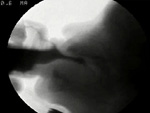
A vii-calendar month-onetime infant was referred for VFSS by her principal pediatrician considering of concerns related to risks for aspiration while feeding orally. She was a term infant with intrauterine growth retardation. An upper GI examination a few days prior to this examination had revealed occasional silent aspiration with swallowing, gastroesophageal reflux, and mild gastritis, and vomiting. She had mild developmental delays with hypertonicity.
This infant was very eager to have her bottle. This section of the VFSS shows multiple aspiration events with the first aspiration occurring at the initiation of the fourth consume. The aspiration appeared most closely correlated with timing and coordination deficits. With increased residue in the pharynx, particularly in the pyriform sinuses, she as well aspirated equally residue spilled into the open airway post-obit some swallows. She fabricated no response to the aspiration, but she kept sucking eagerly. She fussed when the nipple was taken out of her mouth. Thickening liquid did not eliminate aspiration events. She did non aspirate with spoon feeding (not shown in this section).
Video iii: Aberrant swallowing resulting in delayed aspiration. (Occasional aspiration)
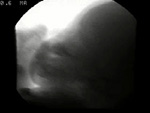
This 6-calendar month-old baby was referred for VFSS because of concerns related to airsickness during and apart from feedings likewise every bit choking and coughing during nipple feeds. History was significant for intrauterine drug exposure that included cocaine and methamphetamine throughout the pregnancy. He has been in foster care since the newborn period. Thickened feeds had not helped reduce vomiting. An UGI examination 2 weeks prior to this examination revealed nonobstructive upper GI with gastroesophageal reflux.
He was positioned for canteen feeding and lateral view with foster mother presenting his formula with milk bottle nipple used at home. His suck-to-swallow ratio varies from i:ane to three:1, which is basically efficient for taking sufficient book to meet caloric needs. Note that when he sucks multiple times earlier swallowing, the liquid is seen deeper in his pharynx (to the pyriform sinuses) resulting in a brief delay in initiation of a pharyngeal swallow. When that blueprint is seen, one gets suspicious for potential aspiration as an infant continues to suck and consume. Therefore it is important to observe more than just a few swallows with canteen feeding. Past the sixteenth swallow, aspiration occurred as he was initiating a consume. There was no cough. He continued to suck and swallow, with additional aspiration events. Near the end of this department, the nipple was removed and you tin can tell that he produced a delayed coughing, only he did not clear his airway.
Flexible Endoscopic Examination of Swallowing (FEES)
For infants and children, a pediatric otolaryngologist and spoken communication-linguistic communication pathologist typically perform the FEES together as a team. Swallowing part parameters evaluated include pharyngeal pooling of secretions, premature spillage into pharynx, laryngeal penetration, aspiration, residue, vocal fold mobility, gag reflex, and laryngeal adductor reflex (LAR). Major disadvantages include incomplete exam of the pharyngeal stage of swallow, lack of visualization of the oral or esophageal phases of swallowing, and thus the inability to evaluate coordination of pharyngeal motility with natural language action, laryngeal elevation or excursion, and upper esophageal opening. When airway concerns are prominent, FEES is preferable to VFSS to appraise airway rubber fifty-fifty prior to oral intake. FEES can be performed at the bedside, which can exist a major reward for some infants and children. This examination requires the child's cooperation, just as the VFSS does in social club to take reliable and valid findings that should help to clarify the oral feeding status. This examination may be especially useful for children with developmental disabilities and neurologic impairments.
Top of page
Management of Feeding and Swallowing Bug in Pediatrics
Management decisions are made in lite of the total child with consideration for medical/surgical, nutrition, oral sensorimotor, behavioral, and psychosocial factors. Intervention strategies are focused on primary problem areas of arrears. Prove-based exercise guidelines are needed. Airway stability and adequate nutrition/hydration status are prerequisites for all oral sensorimotor and behavioral approaches to increase the book of oral feeding or to improve oral skills to expand nutrient textures and to increase efficiency. Initial efforts to improve caloric intake may include increasing caloric density of food, as per the dietitian and physician, forth with making adjustments of food textures to improve efficiency and safety of oral feeding. Adequate fluid intake is critical to meet hydration needs and to minimize potential of constipation, which can be a major complicating factor in facilitating hunger, appetite, and interest in feeding.
Oral sensorimotor intervention involves strategies related to the function of oral structures for bolus germination and oral transit that are under voluntary neurologic command, that is, the jaw, lips, cheeks, tongue, and palate. Techniques vary widely among therapists with little evidence of efficacy, efficiency, and outcomes. Some children appear to improve oral part when foods vary on the ground of texture, tastes, and temperature. Other children show significantly improved oral skills and timing of swallowing with posture and position changes. Frequently used strategies include tapping or stroking the face and using a "Nuk ®" brush or other kinds of stimulation. Parents and therapists report that this kind of stimulation will "wake upwardly the system" so the child will eat more quickly and more firmly. However, data are sorely defective. Goals of specific exercises usually relate to improved strength and coordination, merely without defined objective measures of outcomes.
Professionals and parents practice not disagree about the importance of acceptable nutrition/hydration. Nonetheless, in that location is more than likely to be disagreement regarding the demand for a gastrostomy tube (GT). It is not unusual for parents to demand some time, at least a few weeks or even months, earlier they agree to a GT. A nasogastric (NG) tube may be used for a few weeks as a exam to decide if the child tolerates needed volume of liquid per feeding time without discomfort or emesis. The NG tube feeds also provide an opportunity to monitor weight proceeds. If nonoral feeds are likely to exist required for longer than several weeks, non necessarily for total oral feeding but peradventure only to meet fluid requirements or for medications, a GT should be considered. A feeding gastrostomy tube ofttimes relieves stress on the caregivers by allowing freedom from fear of malnutrition. More efficient caloric delivery besides frees fourth dimension for other more pleasurable interactions with the child. Some oral therapy should continue at appropriate levels to ensure the continued experience and maximal development of oral skills over fourth dimension. Speech-language pathologists can train parents, who can then have advantage of offering tastes during several brief "practice" sessions each twenty-four hours. Duration of each session should be simply about v to 10 minutes in these circumstances. When a child is on bolus feeds, optimal timing for "pleasurable practice" is probable to be shortly before the start of the tube feeding, providing the child does not show aversive reactions to the tube feedings.
Information on evidence-based research are needed. All therapeutic approaches accept a master goal for each child to feel salubrious, safety, and pleasurable oral feeding, whether the child is a total oral feeder or gets merely limited quantities and types of food for practise and pleasance. Pulmonary stability and nutritional well-being are always the main goals for all infants and children.
Article related content
Source: https://www.nature.com/gimo/contents/pt1/full/gimo17.html

Post a Comment for "Signs Tube Fed Baby Will Fail Second Swallow Study"